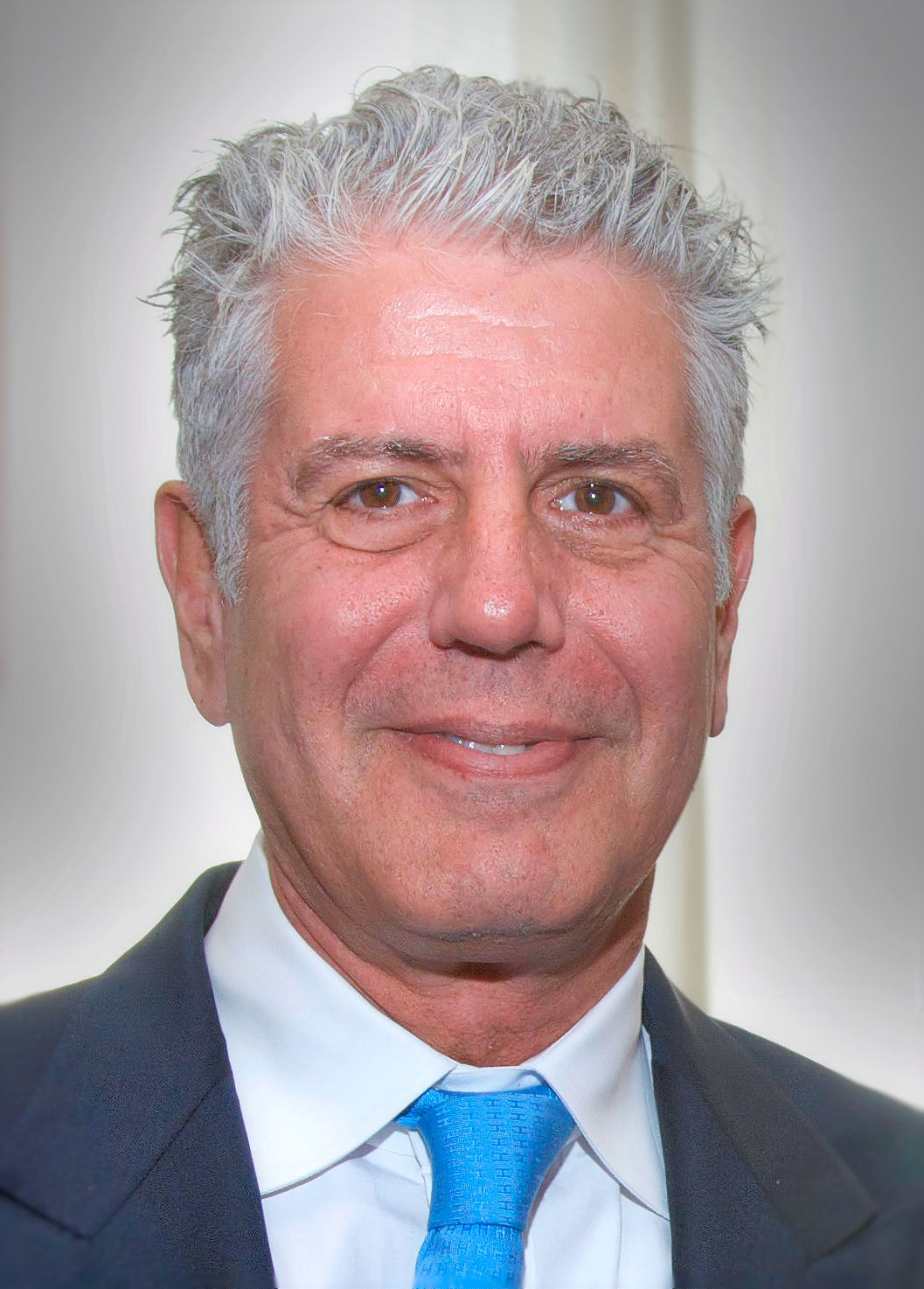
"Travel isn't always pretty. It isn't always comfortable. Sometimes it hurts, it even breaks your heart. But that's okay. The journey changes you; it should change you."
Anthony Bourdain was many things — a line cook who became a household name, a writer who turned the hidden world of professional kitchens into literature, and a traveler who sat down at tables across the globe and showed us that food is the great equalizer.
Born in New York City, he spent decades cooking in professional kitchens before his 2000 memoir Kitchen Confidential upended the food world. What followed was a career unlike any other in television — one defined not by glamour, but by curiosity, honesty, and a genuine love for people and their stories.
You learn a lot about someone when you share a meal together. Food is everything we are. It's an extension of nationalist feeling, ethnic feeling, your personal history, your province, your region, your tribe, your grandma.— Anthony Bourdain
He didn't just visit these places — he sat with the people, ate what they ate, and told their stories with respect and reverence.
His love for Japan ran deep — ramen at 2am, sushi at Tsukiji, sake in tiny bars. He called Tokyo "the greatest food city on the planet."
Where he ate bun cha with President Obama. He described Vietnam's food as among the best in the world — and he returned again and again.
He was an outspoken defender of Mexican immigrants and their cuisine. "The entire American restaurant industry is built on the backs of immigrants."
One of his most daring episodes — showing American audiences the warmth, hospitality, and extraordinary food culture inside a country shrouded in misconception.
He dove headfirst into the numbing fire of Sichuan peppercorns — and came back changed. "The food is so confrontational it demands your full attention."
He championed Filipino food before it became fashionable — celebrating sisig, kare-kare, and the bold, unapologetic flavors of a cuisine long overlooked.
His Beirut episode began as a celebration and became a document of war. He never flinched. The episode won a Peabody Award.
Home. The place that made him. From the grimy kitchens of Les Halles to late nights in the Bronx — New York was always the beginning and the end.
He changed what food television could be — and what food writing could say.
The book that changed everything. A raw, profane, brilliantly written account of life in professional kitchens. An instant bestseller that launched a career no one saw coming.
A follow-up that was even more personal — reckoning with fame, the food world, his own contradictions, and what it means to keep caring about the things you love.
His first foray into travel writing — a world tour in search of the perfect meal that set the template for everything that followed on television.
His first television show. Rough around the edges, full of personality — a preview of the voice that would define a generation of food television.
142 episodes across six continents. A Peabody Award winner. The show that proved food television could be journalism — and journalism could be deeply human.
His magnum opus. 12 seasons, 104 episodes, 5 Primetime Emmy Awards. More than travel — it was anthropology, politics, and love wrapped in the language of food.
Raised in Leonia, New Jersey. Developed a taste for adventure early — his first raw oyster, eaten at age nine in France, would become legendary.
Earns his degree from the Culinary Institute of America — beginning decades of work in New York's professional kitchen trenches.
Becomes executive chef of the iconic New York brasserie while secretly writing the piece that would change his life.
The book explodes onto bestseller lists. Nothing about his life — or food culture — would ever be quite the same.
Travel Channel. The show redefines food television — blending gonzo journalism, genuine curiosity, and cinematic storytelling.
His most ambitious work. Over five years and 12 seasons, he travels to places most Americans had never seen — and tells stories most would never forget.
Bun cha with Barack Obama in Hanoi — a $6 meal that made international headlines and captured everything he believed about the power of sitting down to eat together.
June 8, 2018. The world paused. Presidents, cooks, travelers, and millions of ordinary people who felt they knew him — all of them felt the loss.
He didn't just change how we think about food. He changed how we think about people, places, and what it means to pay attention.
The idea that some lives matter less is the root of all that is wrong with the world.— Anthony Bourdain
He showed that food is never just food — it's history, identity, politics, and love. Every meal is a story, and every story deserves to be told with care.
He traveled to Iran, Gaza, Myanmar — places most travel shows feared to go. His curiosity was never performative. It was sincere, and it showed.
He brought literary standards to writing about restaurants and kitchens. He made it clear that the people who cook your food matter — and deserve to be seen.
He championed immigrants, called out industry exploitation, and spoke about kitchen workers with the same dignity he afforded world leaders. He never forgot where he came from.
His death brought mental health conversations into kitchens, newsrooms, and living rooms around the world. His struggle continues to destigmatize mental illness in high-pressure industries.
Millions of people tried foods they'd never tasted, went to places they'd never considered, and looked at strangers with a little more warmth — because of him.
"Maybe that's enlightenment enough — to know that there is no final resting place of the mind, no moment of smug clarity. Perhaps wisdom is realizing how small I am, and unwise, and how far I have yet to go."